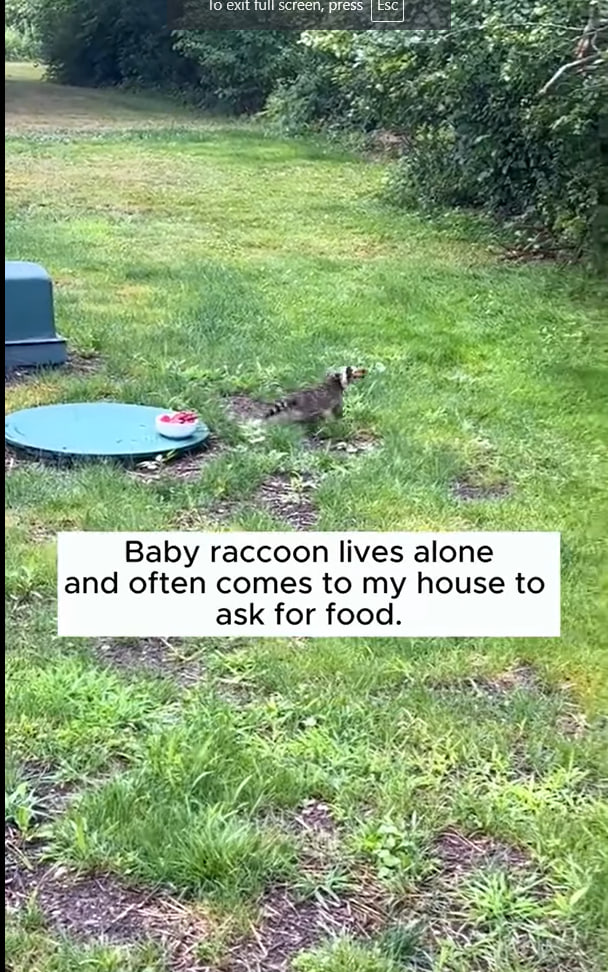
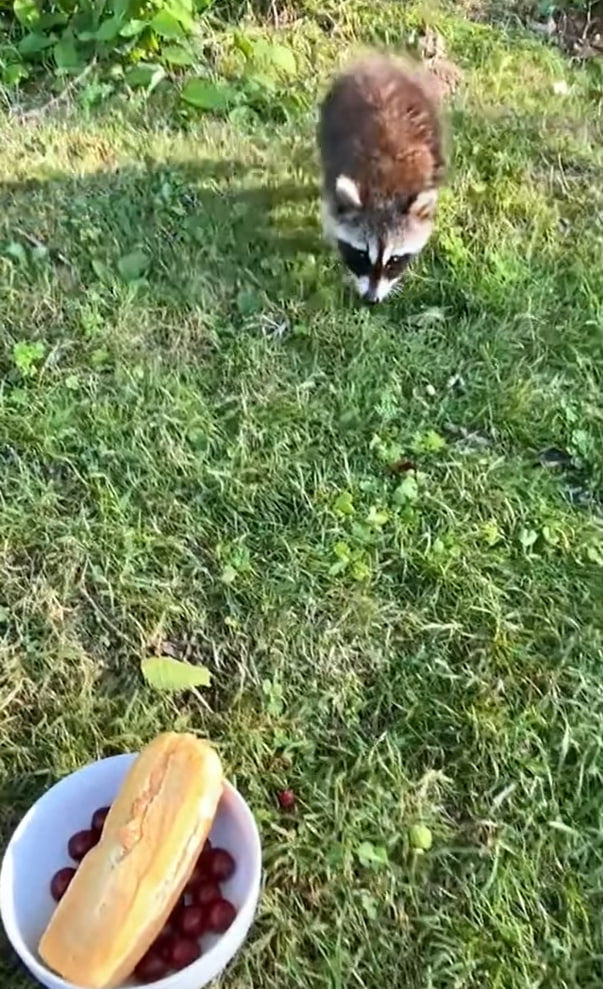
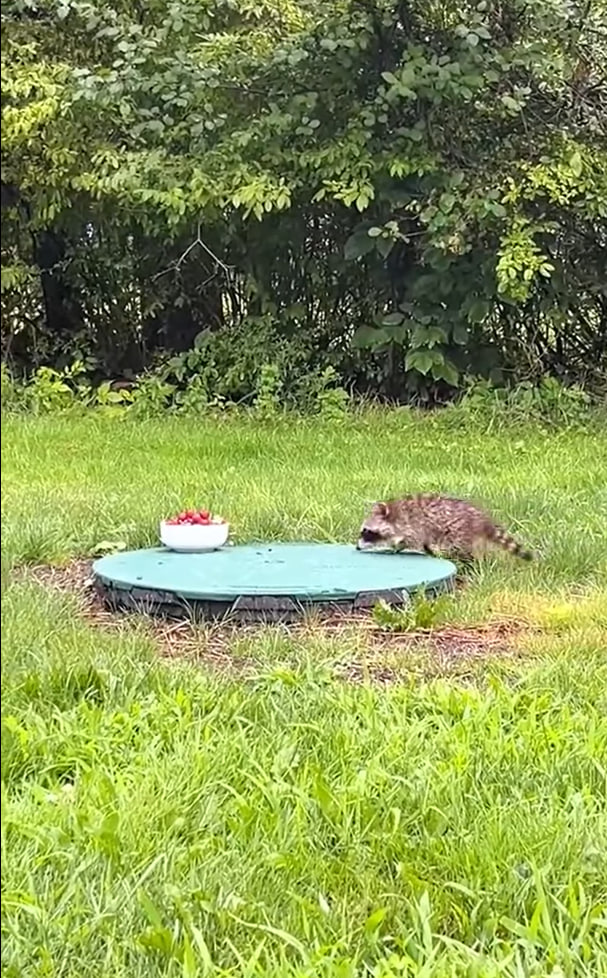
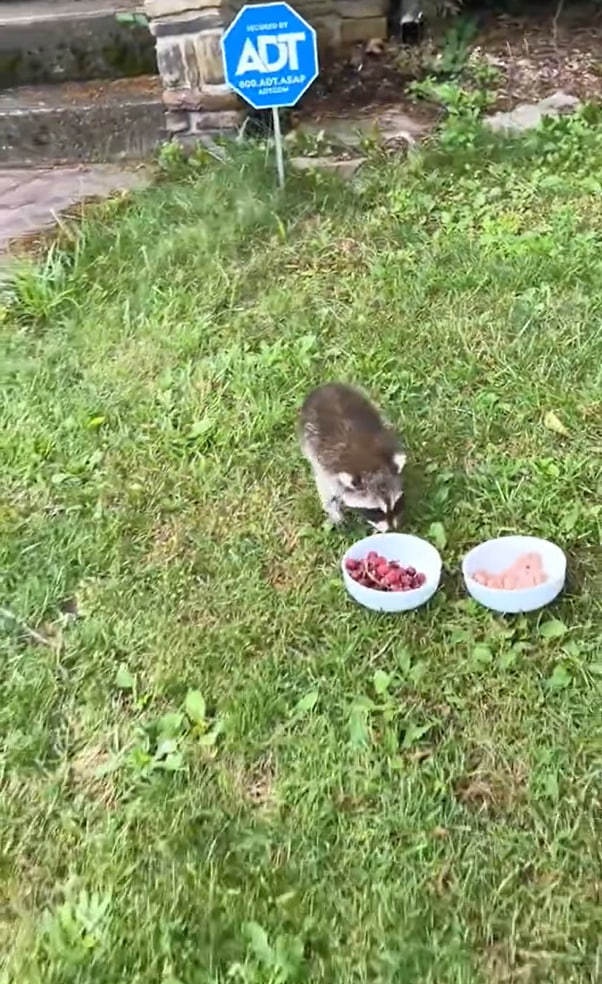
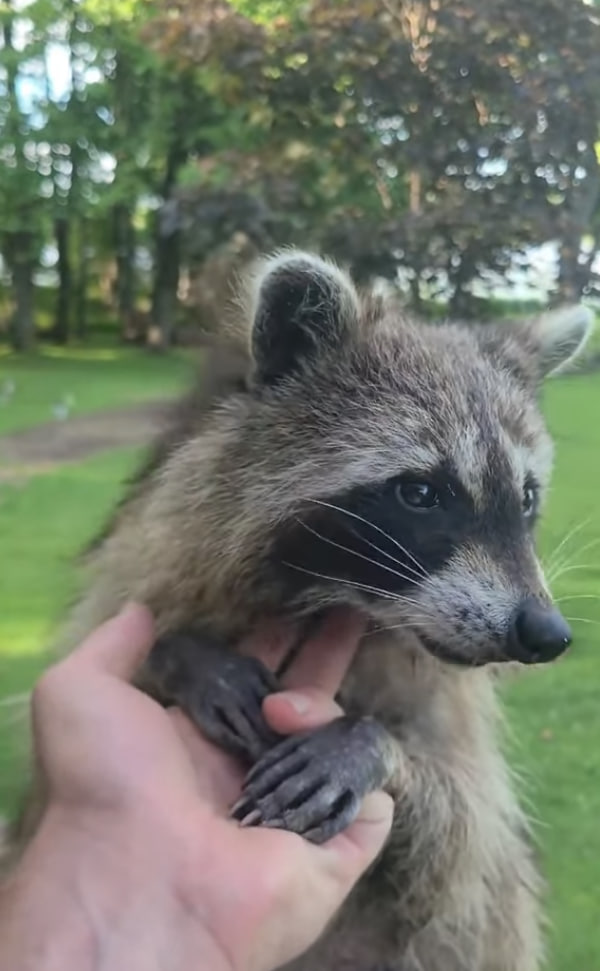
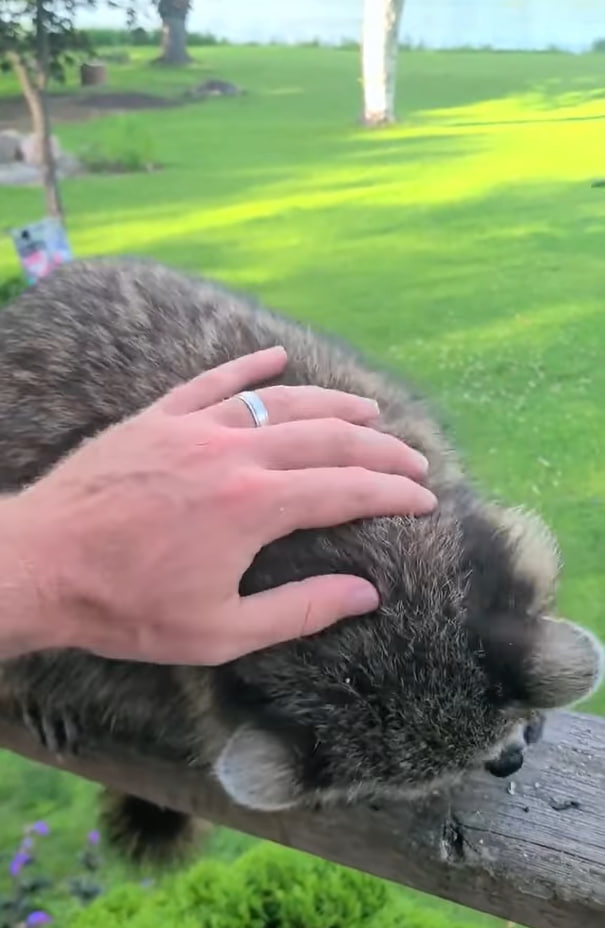
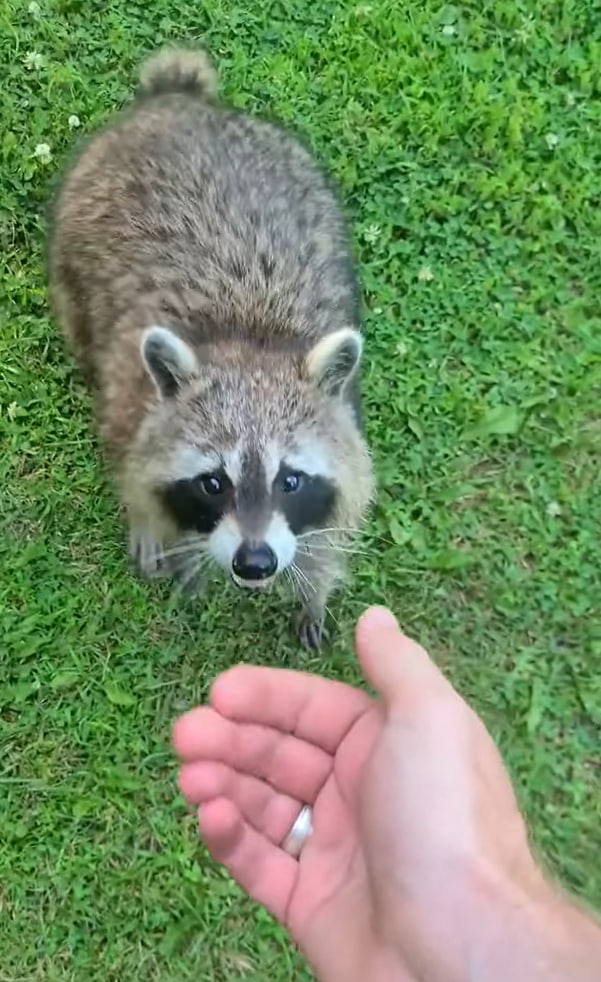
In a quiet, tree-lined neighborhood, an unexpected visitor has become a regular guest — a baby raccoon, seemingly alone and without a family, who now frequently appears at one local home, seeking food and perhaps something more: companionship.
The homeowner, who first noticed the small raccoon a few weeks ago, recalls the first encounter with curiosity and concern. “He was just sitting at the edge of the backyard one evening, watching the house. He looked so tiny, maybe only a few months old. At first, I thought he’d run away if I got close, but he just stayed there, staring, as if he was asking for something.”
Moved by the little creature’s timid but persistent presence, the resident left out a small bowl of fruit and nuts. To their surprise, the baby raccoon cautiously approached and began to eat. Since then, the visits have become routine — often around dusk or early morning, the young raccoon appears, waiting patiently near the porch.
“He never makes a mess, never growls or acts aggressively. He just comes, eats quietly, and leaves,” said the homeowner. “There’s something very gentle about him, like he’s just trying to survive but doesn’t want to cause trouble.”
The baby raccoon’s solitary nature raises questions. Usually, raccoon kits stay with their mothers for several months after birth. The absence of any other raccoons nearby suggests this one may be orphaned — a harsh reality of life in the wild.
Wildlife specialists warn against treating wild animals as pets, no matter how endearing their behavior may be. “When a wild animal, especially a young one, begins frequenting human homes, it often means something is wrong — usually the loss of its mother,” explains Dr. Sandra Nguyen, a local wildlife rehabilitator. “While feeding may seem kind, it can lead to dependency and even put the animal at risk if it starts to associate humans with food.”
Dr. Nguyen advises residents to contact licensed wildlife professionals if they believe a baby animal is abandoned. In many cases, rehabilitators can assess whether the animal truly needs help or if the mother may still be nearby, hidden or foraging.
In this case, the homeowner has reached out to a local wildlife rescue center and is waiting for guidance. “I just want to do what’s best for him. He’s so sweet, but I know he belongs in the wild, not on my porch.”
Until then, the baby raccoon continues his quiet routine, offering a rare and touching glimpse into the vulnerability of wildlife living alongside humans. His story, both heartwarming and sobering, is a reminder of the fragile boundary between nature and neighborhood — and the small acts of kindness that can make a difference, even if only for one little life.